


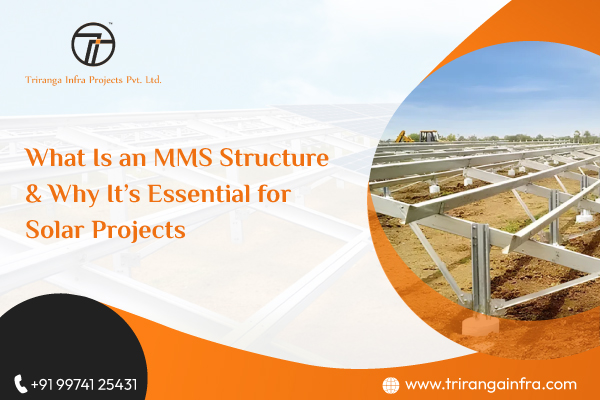
The rapid growth of solar energy has transformed how power projects are planned and executed. At the core of every efficient solar installation lies a well-engineered support system that holds solar modules firmly in place and aligns them for optimal energy generation. This support system is known as a Module Mounting Structure, commonly referred to as an MMS structure. Understanding what an MMS structure is and why it plays a critical role in solar projects help investors, developers, EPC companies, and project owners make informed decisions that impact performance, durability, and long-term returns. We explore the concept, components, types, benefits, and importance of MMS structures in solar projects. The focus remains on accuracy, clarity, and practical relevance, keeping the discussion aligned with real-world solar industry practices and the solutions offered by Triranga Infra Projects Pvt. Ltd.
Understanding MMS Structure in Solar Projects
An MMS structure is a mechanical framework designed to support and secure solar panels in a fixed or adjustable position. It holds modules at a calculated tilt and orientation to maximize sunlight exposure throughout the day and across seasons. Without a reliable mounting structure, even high-efficiency solar panels cannot deliver their full potential.
The Module Mounting Structure forms the backbone of any solar installation, whether it is a ground-mounted solar park, rooftop system, carport installation, or industrial solar plant. The structure must withstand environmental forces such as wind, rain, temperature variations, and in some regions, seismic activity. This makes structural design and material selection a vital part of solar project planning.
Why MMS Structure Is Essential for Solar Projects
The importance of an MMS structure goes far beyond simply holding solar panels. It directly affects performance, safety, and project lifespan.
First, proper module alignment allows solar panels to capture maximum sunlight. The Module Mounting Structure maintains the ideal tilt angle and orientation, which contributes to consistent power generation. Second, structural integrity protects the solar array from physical damage. A robust MMS Structure for Solar Panels resists corrosion, mechanical stress, and weather-related wear, reducing maintenance needs and replacement costs. Third, MMS structures help maintain proper airflow beneath panels. This prevents overheating, which can reduce panel efficiency. Good ventilation plays a key role in maintaining stable output over time. Lastly, compliance with engineering standards and local regulations depends heavily on the quality of the mounting structure. A professionally designed Module Mounting Structure supports regulatory approvals and long-term operational safety.
Key Components of an MMS Structure
An MMS structure consists of several interconnected components that work together as a unified system. The primary members include vertical posts or columns that transfer loads to the foundation. These are often fabricated from galvanized steel or aluminum, selected based on project requirements.
Horizontal beams and purlins connect the vertical supports and provide a mounting surface for the solar panels. The MMS Structure for Solar Panels uses these components to distribute weight evenly across the structure.
Fasteners, clamps, and brackets secure modules firmly while allowing controlled thermal expansion. High-quality fasteners protect the integrity of the Module Mounting Structure over long operational periods.
Materials Used in MMS Structures
Material choice is a critical factor in MMS structure performance and lifespan. Galvanized steel is commonly used due to its strength, durability, and resistance to corrosion. Hot-dip galvanization extends the life of the Module Mounting Structure, particularly in outdoor environments.
Aluminum structures offer a lightweight alternative, especially suitable for rooftop installations. Aluminum-based MMS Structure for Solar Panels solutions are corrosion-resistant and easier to handle during installation.
Material selection depends on environmental exposure, load requirements, project budget, and design life. Triranga Infra Projects Pvt. Ltd. focuses on material standards that align with industry’s best practices and project-specific demands.
Design Considerations for MMS Structures
Designing an MMS structure involves multiple technical considerations. Wind load analysis determines how the structure responds to high-speed winds and storms. Structural calculations account for panel weight, snow load in applicable regions, and seismic factors.
Site conditions such as soil type and terrain influence foundation design. A properly engineered Module Mounting Structure adapts to uneven ground while maintaining alignment and stability.
Corrosion protection is another major factor. Environmental exposure, especially in coastal or industrial areas, requires specialized coatings to preserve the MMS Structure for Solar Panels over its operational life.
Benefits of a High-Quality MMS Structure
A high-quality MMS structure delivers measurable benefits throughout the project lifecycle. Stable mounting reduces mechanical stress on panels, which supports consistent performance. Optimized orientation enhances energy generation without adding complexity to the system. The Module Mounting Structure maintains alignment year after year with minimal adjustment.
Durable materials reduce long-term maintenance expenses. A reliable MMS Structure for Solar Panels minimizes downtime and protects project investments. Safety is another critical advantage. Well-designed structures reduce the risk of panel displacement or structural failure, protecting both equipment and personnel.
Why Choose Us
Choosing Triranga Infra Projects Pvt. Ltd. means partnering with a team that understands the structural backbone of solar energy systems. The company combines engineering precision, quality-controlled materials, and practical site knowledge to deliver MMS structure solutions that support performance and longevity. Each MMS Structure For Solar Panels is designed with a clear focus on safety, adaptability, and real-world operating conditions, making Triranga Infra Projects Pvt. Ltd. a reliable choice for solar developers seeking dependable structural support.
Conclusion
An MMS structure is far more than a supporting frame; it is a fundamental component that defines the efficiency, safety, and durability of a solar project. From proper panel alignment to long-term structural stability, the Module Mounting Structure plays a decisive role in project success. Selecting the right MMS Structure for Solar Panels involves thoughtful design, quality materials, and experienced execution. With professionally engineered solutions from Triranga Infra Projects Pvt. Ltd., solar projects gain a strong foundation that supports consistent performance, protects investment value, and contributes to sustainable energy generation over the long term.
Looking for expert guidance on MMS structures for solar projects? at +91 9974125431 or email info@trirangainfra.com.
Key Takeaways: –
- MMS Structures Are Essential for Solar Panel Stability
Module Mounting Structures (MMS) securely hold solar panels in optimal orientation, ensuring consistent sunlight capture and long-term energy generation. - Structural Integrity Protects Investment
High-quality MMS structures resist environmental stress, corrosion, and mechanical damage, reducing maintenance costs and extending the solar project’s lifespan. - Material Choice and Design Impact Performance
Galvanized steel and aluminum are commonly used for strength, corrosion resistance, and suitability for rooftop or ground-mounted solar installations, with designs tailored to site-specific conditions. - Optimized Alignment Enhances Energy Output
Proper tilt, orientation, and airflow management provided by MMS structures prevent overheating and improve overall efficiency of solar panels. - Customization and Quality Engineering Are Critical
Professional MMS solutions, like those offered by Triranga Infra Projects Pvt. Ltd., focus on load calculations, environmental factors, and installation practicality to ensure reliable performance and regulatory compliance.
FAQs
What is an MMS structure in solar projects?
An MMS structure is a mechanical framework that supports and positions solar panels for optimal sunlight exposure and long-term stability.
Why is an MMS structure important for solar panel performance?
It maintains proper alignment, structural stability, and airflow, which directly influences energy output and system lifespan.
Which materials are commonly used in MMS structures?
Galvanized steel and aluminum are widely used due to their strength, corrosion resistance, and suitability for different installation types.
Can MMS structures be customized for different sites?
Yes, a Module Mounting Structure is designed based on site conditions, load requirements, and project scale.
Who provides reliable MMS structure solutions in India?
Triranga Infra Projects Pvt. Ltd. offers engineered MMS structure solutions tailored to diverse solar project needs.